First Regional Co-operative Credit Union Ltd.
The history of First Regional Co-operative Credit Union Ltd. is rooted in some 55 years of dedicated service to its members through a range of strategic mergers and propitious partnerships that have resulted in a more vibrant, stronger Credit Union, equipped to better serve its members.
It is this rich history, anchored by a commitment to continuous improvement that has enabled First Regional to deliver world-class financial products to its members, providing them with opportunities to realize their life ambitions and goals. First Regional emerged as a larger, safer Credit Union in 2006, with the amalgamation of the St. Ann Co-operative Credit Union and the St. Mary Co-operative Credit Union. The newly-minted First Regio0nal Co-operative Credit Union Ltd. was ready to facilitate change, improve the welfare of the less fortunate, and shape the future of the communities in which it operates. Since 2006, First Regional has garnered a number of awards and achievements, and has marked various milestones. The latest milestone was its strategic merger in July 1, 2013 with the Round Hill Hotel Staff Co-operative Credit Union and the Hospitality Industries Co-operative Credit Union, which saw First Regional expanding its scope of operations island-wide to serve workers in Jamaica's hospitality industry. Read More The birth of First Regional Co-operative Credit Union Ltd.
….a larger, safer and more powerful credit union emerges. On January 1st, 2006, the St. Ann Co-operative Credit Union and the St. Mary Co-operative Credit Union were amalgamated, and operated as the St. Ann Co-operative Credit Union Ltd. The Credit union functioned under this name until November 1st, 2006, when it was re-named First Regional Co-operative Credit Union Ltd. to accurately reflect the nature of the merger. A Historical Look at the St. Ann and St. Mary Credit Unions
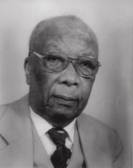
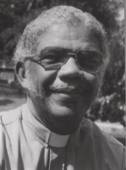
The St. Ann Co-operative Credit Union was incorporated on the 1st of February 1973, under the leadership of the then President, Rev. Reynold Smith. Mr. Smith successfully guided the development of the St. Ann Co-operative Credit Union from its predecessor, the XLCR Co-operative Society, which was established in 1952 on Main Street in St. Ann’s Bay. Mr. Leyland Walker served as President of XLCR from 1952 until 1968, during which time Rev. Reynold Smith served as XLCR’s Secretary and Treasurer; both these men were integral in getting the credit union started. The Men Responsible for the Birth of the St. Ann Co-operative Credit Union
In addition to being President of the XLCR Co-operative Society at the time, Mr. Leyland Walker was also Manager of the People’s Co-operative Bank. Outside of work, he was deeply involved in activities relating to his church and community. He was a Lay Preacher and class leader at the Methodist Church, and he was also a Justice of the Peace. His numerous church and community involvements caused him to be well respected and trusted among the people. The trust and confidence that the people had in him, made it easy for them to become members and transact business with the credit union. The now deceased Leyland Walker was married to Irene, and the union produced three children. Rev. Reynold Smith, who served as Treasurer of the institution under the Presidency of Leyland Walker between 1952 and 1968, succeeded Mr. Walker as President of the XLCR Co-operative Society in 1968, and became the first President of the
St. Ann Co-operative Credit Union in 1972, where he served until 1981. Rev. Smith also served on the Board of the Jamaica Co-operative Credit Union League between 1958 to1964 and 1972 to1987. He was President of the League between 1980 and 1983. Rev. Reynold Smith was a good family and church man, who contributed much to the development of not just the Jamaica Credit Union Movement, but the wider community, which he served. Hailing from the parish of St. James, Rev. Smith attended the Cornwall College, and went on to further study Bookkeeping & Accountancy. He worked as an Accountant from 1948 until 1994 within various companies, including the Kaiser Bauxite Company (between 1964 and 1982). Rev. Smith was also an Anglican Minister of Religion (ordained in 1975), and he was the Anglican Diocesan Secretary between 1983 and 1994. All Rev. Smith’s Credit Union work was voluntary, except for a brief stint as Manager of the Montego Bay Credit Union between 1982 and 1983. Rev. Smith married Minetta Smith in 1949; the union produced three children. He died in 1995. In the beginning, as Treasurer, Rev. Smith had to sign every passbook. The people wanting to join often visited his home (which was located at 9 Main St., St. Ann’s Bay) to pay the entrance fee and collect their books. At the time, there was only one employee and a one room office, which was located at the back of the People’s Cooperative Bank (where Mr. Leyland Walker was manager at the time) on Main Street until the 1970s when the move to Bravo Street took place. It was only that one employee that was paid. Mr. Leyland Walker, Rev. Reynold Smith, Mr. Clevie Smith, Mr. Roland McPherson and other volunteers recruited members from all over the parish of St. Ann, as well as served on committees and the Board. In 1971, the Credit Union had 2000 members, and by this time they outgrew the one room and moved to 12 Bravo Street, which over time also proved to be too small for the fast growing Credit Union. By that time most Kaiser Bauxite and Reynolds Bauxite employees were using payroll deductions to save and repay loans. The Credit Union’s Board then decided to purchase the adjoining property, and build the structure that now houses the Head Office of First Regional Co-operative Credit Union at 14 Bravo Street, St. Ann’s Bay. In 1983 the member count for the St. Ann Co-operative Credit Union stood at 18,000. A few short years later, First Regional Co-operative Credit Union boasted over 76,000 members.
The St. Mary Co-operative Credit Union
Dr. Herman Ming joined the St. Mary Credit Union in 1978 as the institution’s second General Manager, and remained there until 1989. During his leadership of the Credit Union, the institution saw phenomenal growth in the areas of membership, savings, loans and assets. At the time he started working with the Credit Union, they had owned a very old building in Highgate, which was designated the headquarters, and branches were operated in each of the locations that formed a part of the amalgamated St. Mary Co-operative Credit Union (that is, Islington, Annotto Bay, Pembrook Hall and Belfield). The Islington and Belfield branches operated out of the schools in the respective areas one night per week; The Pembrook Hall branch operated out of the collector’s house and Annotto Bay operated from the upstairs of another building (where the Bata Shoe store operated downstairs). These conditions were most unacceptable, and did not lend itself to confidence, growth and development. The task was therefore to bring about change and establish systems, procedures and suitable accommodation that would boost that savers' confidence in the institution. In a move towards upgrading the facilities at the St. Mary Credit Union, an old bar was purchased in the town of Annotto Bay from an auction sale. This building was remodeled to accommodate a spacious office, which later became the Headquarters for the St. Mary Credit Union, a lawyer’s office and a doctor’s office. This location is still being used today to provide facilities to serve the members and provide rental income to the Credit Union. The next task was to demolish the old building in Highgate and move the Credit Union’s Headquarters to Annotto Bay. Under the leadership of Dr. Ming, the St. Mary Co-operative Credit Union created history in the Credit Union Movement in Jamaica when it became the first credit union in Jamaica to produce Audited Financial Statements. Dr. Ming’s vision for the Credit Union was to provide a viable alternative for the people of St. Mary in the area of savings and loans; use state-of-the-art technology to provide quality service to the members, and to have active participation of the members in all aspects of the Credit Union. |


About Us


Discovery Bay Branch
 |
|
| Address: |
Main Street Philmore Scott's Plaza St. Ann |
| Telephone: | 973-2640 |
| Email: | info@firstregionalcreditunion.com |
Head Office & St. Ann's Bay Branch
 |
|
| Address: |
14 Bravo Street, St. Ann's Bay St. Ann |
| Telephone: | 972-2424, 972-0262, 972-0602 |
| Fax: | 972-2662 |
| Email: | info@firstregionalcreditunion.com |
Ocho Rios Branch
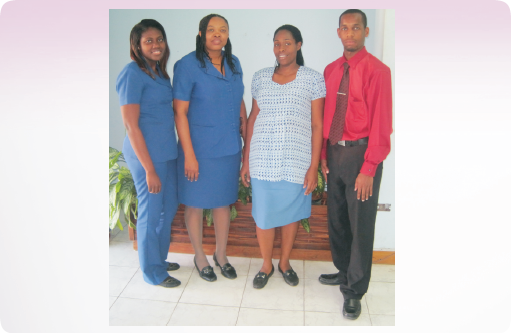 |
|
| Address: |
8 Main Street, Ocho Rios, St. Ann |
| Telephone: | 974-2525, 974-4152 |
| Email: | info@firstregionalcreditunion.com |
Port Maria Branch
| Address: | Main Street, Port Maria |
| Telephone: | 994-2337 |
| Email: | info@firstregionalcreditunion.com |
Moneague Branch
| Address: | Main Street, Moneague |
| Email: | info@firstregionalcreditunion.com |
Brown's Town Branch
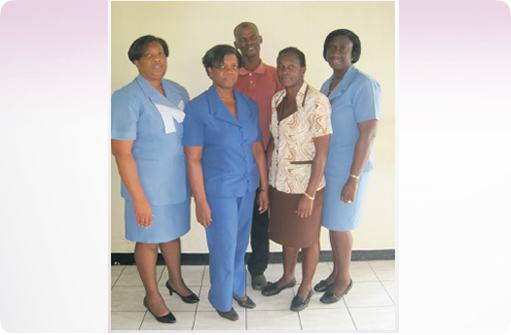 |
|
| Address: |
Main Street, Brown's Town
St. Ann |
| Telephone: | 975-2415 |
| Email: | info@firstregionalcreditunion.com |
Claremont Branch
 |
|
| Address: | Main Street, Claremont |
| Telephone: | 972-4848 |
| Email: | info@firstregionalcreditunion.com |
Guys Hill Branch
| Address: |
Guy's Hill, Main Street St. Catherine |
| Telephone: | 994-3513 |
| Email: | info@firstregionalcreditunion.com |
Highgate Branch
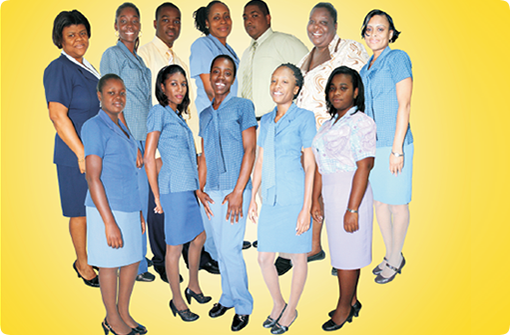 |
|
| Address: |
Main Street, Highgate St. Mary |
| Telephone: | 992-2339 |
| Email: | info@firstregionalcreditunion.com |
Annotto Bay Branch
| Address: | Main Street, Annotto Bay Branch |
| Telephone: | 996-2526 |
| Email: | info@firstregionalcreditunion.com |
Round Hill Branch
| Address: | Main Street Hopewell, Hanover |
| Telephone: | 956-7437 |
 |
 |
 |
 |
The implementation of this Grant Contract is being co-funded by the European Union Banana Support Programme (EUBSP), a project funded by the European Union Special Framework of Assistance (SFA). The views expressed on this web site are those of the First Regional Co-operative Credit Union LTD and do not necessarily reflect those of the EU, SFA, EUBS or RADA. |
|
|||
| Designed And Developed By Database Technologies Ltd |  |
||